
Outplacement Definition for 2026 (What Changed?)
You might be here because you’re curious about what outplacement services really mean, or maybe you’re trying to brush up on ways to support your workforce.
No matter where you’re coming from, I promise you’ll walk away with a clearer understanding of outplacement and how it can empower employees in transition.
Let me introduce myself: My name is Reid, the voice behind ShiftAgain, a career transition and outplacement service specifically tailored for hourly and entry-level employees.
My mission? To help you and your team navigate professional changes with confidence, compassion, and a dash of optimism.

Key Takeaways
Outplacement is the structured support an organization provides to employees who are leaving the company, whether due to layoffs, restructuring, or other reasons. It helps departing employees with practical guidance, emotional support, and resources so they can move into their next role with more clarity and confidence. For employers, it can support brand reputation, reduce tension during exits, and help maintain morale among the team that remains.
Outplacement is employee transition support provided during layoffs, restructuring, or other separations.
The purpose is a smoother exit from the current organization and a confident move into a new job.
Common components include career coaching for job search strategy, resume improvement, and interview preparation.
Networking assistance can help employees connect with potential employers or peers.
Career resources may include access to training programs and tech-enabled tools that support skill development.
Outplacement can signal that an employer values people even when roles come to an end, which can influence how the company is viewed by current staff and the broader community.
Support during transitions can provide stability for departing employees and reduce anxiety for remaining employees.
When employees feel supported, separations may be more amicable and less likely to escalate into disputes.
Some programs may include AI support such as real-time resume feedback, job matching, and coaching tips.
Outplacement Definition
You’ve probably heard terms like “outplacement,” “career transition,” or “career coaching” floating around HR circles. But put simply, outplacement is the structured support an organization provides to employees who are leaving the company - whether due to layoffs, restructuring, or other reasons.
More recently, many outplacement programs also include AI-powered tools to speed up the work employees struggle to do on their own.
These tools can help draft and tailor resumes, generate role-specific cover letters, organize job-search tasks, and provide structured coaching prompts - especially helpful when employees need momentum quickly.
Platforms like PruE AI are an example of a more modern, top-tier approach, combining guided resources with AI-assisted workflows so employees can take action faster while still having a clear support path.
Outplacement isn’t just a transactional service. It’s a signal of how much an employer values its people—even when they’re on their way out.
By investing in outplacement, companies can protect their brand reputation, maintain morale among remaining staff, and give transitioning employees a more organized, meaningful shot at success.
Understanding the Core Purpose of Outplacement
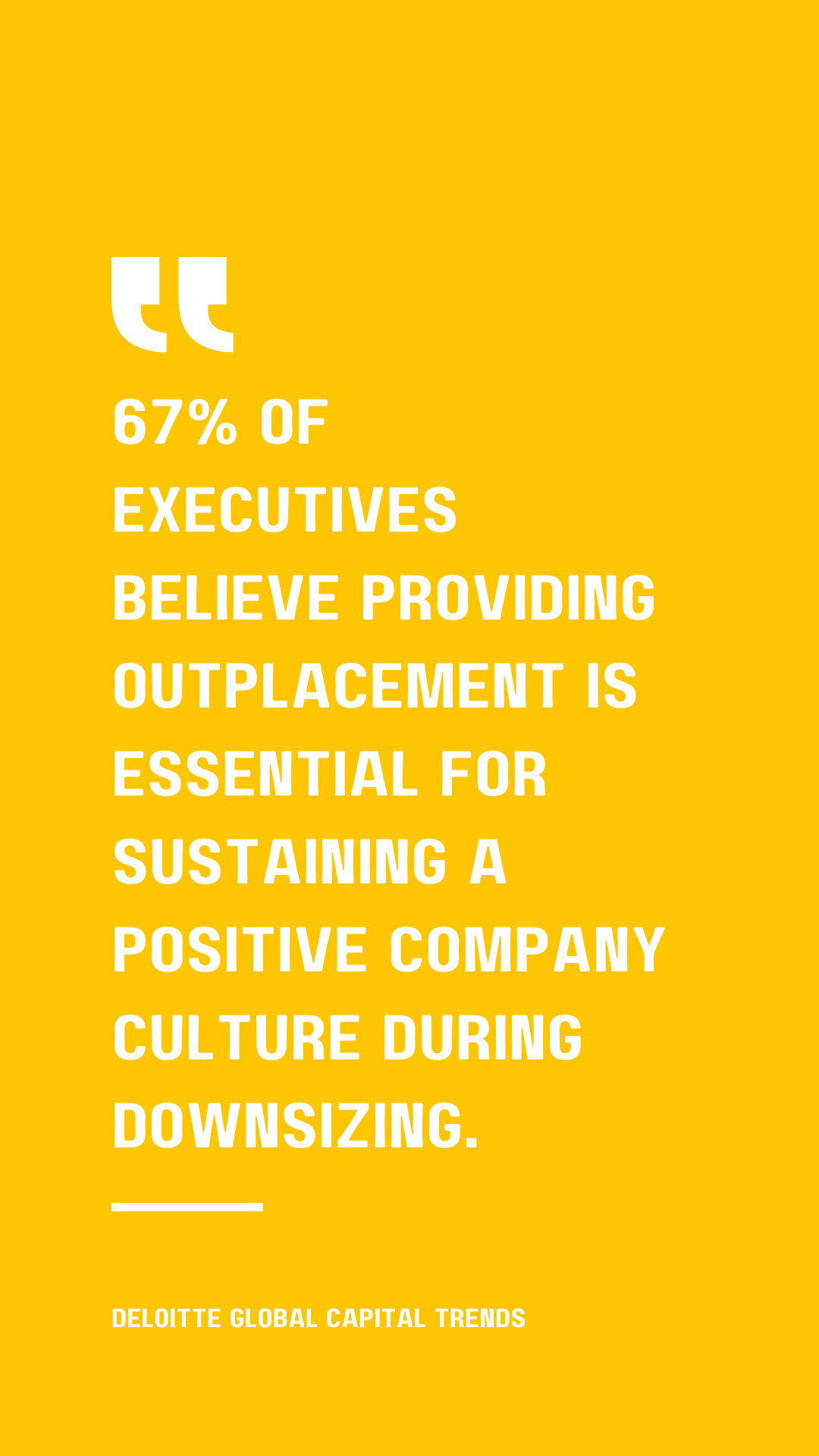
If someone asked me to define outplacement, I’d describe it as a structured, compassionate bridge guiding an employee from a role that’s ending to one that’s just beginning.
The primary goal is to provide departing employees with the tools and support they need to land on their feet quickly and confidently. This often includes:
Career Coaching – Personalized guidance on job search strategies, résumé enhancements, and interview preparation.
Networking Assistance – Tips and platforms to help connect with potential employers or peers in relevant fields.
Career Resources – Access to training programs, tech-enabled development tools, and other opportunities that help individuals pivot effectively into their next career step.
You may hear it called “Career Transition Support,” “Employee Transition Services,” or “Separation Support Programs,” but the purpose remains the same: to ensure a smooth exit from the current organization and a confident stride into a new chapter of professional life.
What Does Outplacement Services Mean for Your Organization?
As an employer or HR representative, you might wonder how outplacement services can directly impact your workplace and overall brand. One immediate benefit lies in brand reputation.
By offering this service, you demonstrate that you care about your workforce at every stage of employment, including when roles come to an end. This helps position you as a people-centric organization in the eyes of current staff, potential hires, and the broader community.
Outplacement also has a profound effect on employee well-being. Career coaching and emotional support provide a sense of stability, even for employees facing an unexpected job change. It can turn a daunting transition into a stepping stone toward new opportunities.
With empathetic guidance, individuals are more likely to stay motivated and maintain a positive outlook, which in turn can reflect well on your company’s culture of care.
In addition to bolstering your brand and supporting individuals, outplacement offers legal and practical benefits.
Employees who feel backed by their former employer are generally less inclined to escalate disputes, reducing the risk of contentious departures. By structuring an outplacement program that addresses both career and emotional needs, you foster a more amicable separation process and preserve goodwill on both sides.
Finally, remember that outplacement isn’t just about those leaving; it also helps maintain morale among remaining staff. Layoffs or terminations can create anxiety among the team members who stay.
Showing that you provide meaningful support (even when parting ways) reassures everyone that your organization values people, regardless of their employment status. This sense of security can alleviate tension, foster loyalty, and help your workforce move forward together.
Frequently Asked Outplacement Questions
What does “outplacement services” mean in plain terms?
It means the company provides help so departing employees can land their next job faster. Instead of leaving someone to figure everything out alone, outplacement gives them a plan and support. It often includes tools and guidance that make the job search more structured.
Think of it as transition support, not a job guarantee.
Is outplacement the same as severance?
No. Severance is compensation paid after separation, while outplacement is job-search support. Some employers offer both, and some offer only one. Outplacement does not replace final pay obligations or severance terms. It’s a separate benefit focused on next-step employment.
Who pays for outplacement—employees or employers?
Employers typically pay for outplacement as part of the separation package. Employees receive access to the service at no cost to them. The employer chooses the provider and the level of support. Employees choose how much they use it.
Who is outplacement for?
Outplacement is for employees who are leaving due to layoffs, restructuring, or role elimination. It can also be offered during other employer-initiated separations when a company wants to support a respectful transition.
Programs can be tailored for hourly workers, professionals, managers, or executives. The best fit depends on the workforce and situation.
What’s usually included in outplacement?
Most programs include job-search strategy, resume support, interview preparation, and guidance on networking and applications. Some also provide structured learning resources or workshops. The mix varies by provider and by employee level. Employers should ensure employees know exactly what’s included from day one.
How long does outplacement last?
Duration depends on what the employer offers and what the provider includes. Some programs are time-bound, while others are structured around milestones. The key is clarity—employees should know the support window and how to access help during that period. If you’re writing policy, define start and end points.
Is outplacement required by law?
Generally, outplacement is not legally required. Companies offer it voluntarily as part of their offboarding and transition approach. Some employers include it to support employee wellbeing and reduce disruption during layoffs. It’s best treated as a business decision, not a legal obligation.
Does outplacement guarantee employees will find a job?
No. Outplacement provides support and resources, but it does not guarantee employment. Results depend on the labor market, the employee’s goals, and participation. Employers should be careful not to overpromise outcomes. The best framing is that it increases structure and support during a transition.
What is the difference between outplacement and career coaching?
Career coaching is often one part of outplacement. Outplacement is broader and may include tools, templates, structured job-search guidance, and multiple forms of support.
Coaching alone may focus more on goals and direction, while outplacement typically adds practical job-search execution help. Employers usually choose outplacement when they want a complete transition program.
Recap/Closing of the Outplacement Definition
I hope this short exploration of an Outplacement Definition has given you fresh insights and a spark of inspiration. We’ve covered what outplacement is, how synonyms can help you spot similar services, and why it all matters to your organization.
From my experience, a well-executed outplacement program transforms uncertainty into optimism, helping people land on their feet in ways they might never have imagined.
If there’s one takeaway I’d love for you to have, it’s this: outplacement is far more than a corporate formality. It’s an investment in people. It’s a clear statement that you value your workforce - even when parting ways.
If you ever have questions or simply want to brainstorm ways to support your hourly and entry-level employees, you know where to find me.
Until next time, keep pushing forward and remember: every transition can be a stepping stone toward a brighter future.
Say Hello to PruE.ai: Your Personal Career Companion
Looking for guidance in today’s fast-changing job market? PruE.ai offers real-time résumé feedback, targeted job matching, and invaluable coaching tips. Check out the video below to see how our AI tool can support every step of your career journey.
Tags: outplacement synonym, define outplacement, outplacement definition, outplacement services meaning, what does outplacement mean, what does outplacement services mean, outplacement synonym, outplacement counseling definition
Author: Reid Alexander
Disclaimer: This content is for informational purposes only & not intended as professional legal or HR advice. Consult with qualified professionals for advice tailored to your specific situation. The author & publisher disclaim any liability for errors, omissions, or actions taken based on this content.